
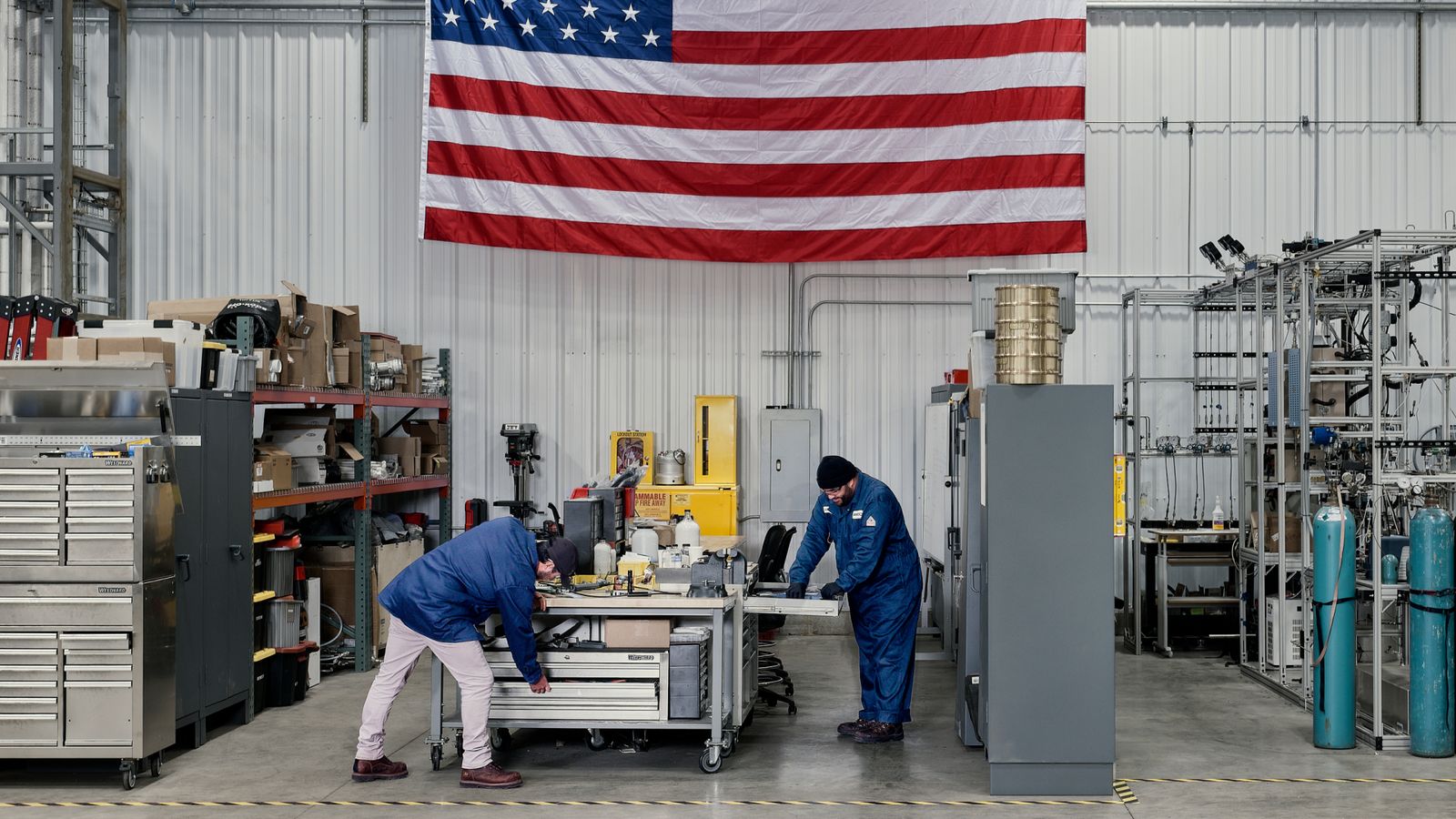
America turns 250 this week. The celebrations will focus on what this country has stood for. We keep thinking about what it's built.
For most of its history, America’s answer to hard problems was the same: make something. No country has been better at it—or more defined by it. Steel. Automobiles. Aerospace. Semiconductors. The industries that shaped the last century of global power were largely conceived, scaled, and exported from here. That’s the American manufacturing tradition. We intend to be part of it.
We’re building the MAD Fuel System™ in New Britain, Pennsylvania. It’s a self-contained, transportable system that produces fully formulated synthetic fuel on demand, at the point of need, without a supply chain. You deploy it where fuel is needed, and it produces fuel there.
Some places just know how to make things. Pennsylvania’s manufacturing heritage runs deep, and that kind of institutional knowledge is not something you rebuild overnight. It's also where we can scale.
Every generation of American manufacturing has been shaped by the security needs of its time. In World War II, factories retooled overnight to build what the mission required. Today, the vulnerability isn't weapons production. It's fuel. And the solution follows the same logic—build it here, make it available there, remove the dependency.
The great manufacturing eras were defined by scale. Make more, faster, cheaper, ship it everywhere. What's emerging now is almost the inverse. Make exactly what's needed, where it's needed, with nothing wasted on the logistics of getting it there. Not fixed infrastructure, but deployable systems of production.
At 250, we think the most American thing AIRCO can be doing is exactly this—finding the problem the existing infrastructure can’t solve, and building something that does. That's what American manufacturing has always been at its best. We're just doing it for the next century's problem.